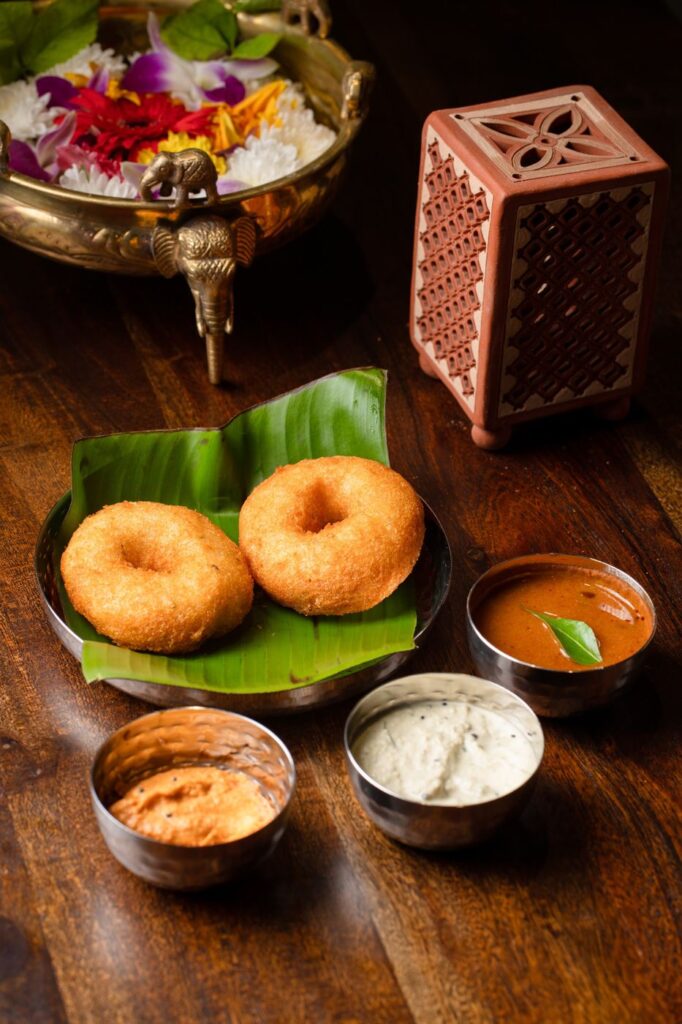
Three names, one plate, endless confusion. Let’s sort it out quickly so you can order without hedging.
Vada vs medu vada, in one line: vada is the category, medu vada is the specific urad dal doughnut you’re picturing, and vada sambar is a medu vada sitting in hot sambar. Order plain if you want crunch. Order it in sambar if you want comfort.
Vada is a category, not a dish
“Vada” covers a whole family of savoury fried things across India. Some are made from ground lentils, some from potato, some from flour and spice. Batata vada in Maharashtra, masala vada made from chana dal, dahi vada sitting in yoghurt — all vadas, none of them interchangeable.
So when someone says they don’t like vada, the follow-up question is always: which one?
Medu vada is the one you’re picturing
Urad dal, soaked and ground to a thick, fluffy batter. Black pepper, curry leaves, ginger, green chilli. Shaped by hand, hole in the middle, straight into the oil.
Medu is Kannada for soft, and it describes the inside. The crust is the loud part but the interior is the test: it should be airy and slightly spongy, not dense, and definitely not greasy. A heavy vada means the batter or the oil temperature was off.
The hole is not decoration. It gives the oil more surface to work on so the middle cooks through before the outside goes too dark — the same reason a doughnut has one.
Vada sambar is a decision, not a different dish
Take a medu vada, put it in a bowl of hot sambar, let it drink. The crust softens, the inside swells, and what you get is somewhere between a dumpling and a soup. Coconut chutney usually goes on top.
People have strong feelings here. The crunch camp says you have destroyed a perfectly good vada. The sambar camp says a vada was always on its way to this. Both are right; they’re describing two different cravings.
| You want… | Order | What you get |
|---|---|---|
| Crunch | Medu vada, plain | Crisp shell, airy inside, chutney on the side |
| Comfort | Vada sambar | Soft through, spicy, eaten with a spoon |
| Both, no compromise | Idli vada | Idli for the sambar, vada kept dry |
One rule for ordering
A plain vada waits badly. It’s at its best in the first few minutes, and it will not survive a long conversation or a drive home. If you’re eating in, order it plain. If it has to travel or sit, order it in sambar — the softening is going to happen anyway, so it may as well happen in something delicious.
Ours are on the tiffin counter, both ways. Pictures, as always, on @benneandbrew.
See the menu · Get directions · Call +91 94033 32769 · Book a table
Frequently asked questions
What is the difference between vada and medu vada?
Vada is the general term for a savoury fried snack made from ground lentils, potato or flour. Medu vada is the specific doughnut-shaped one made from ground urad dal — soft inside, crisp outside. All medu vadas are vadas; most vadas are not medu vadas.
What is medu vada made of?
Ground urad dal, seasoned with black pepper, curry leaves, ginger and green chilli, shaped by hand with a hole in the middle and deep-fried. Medu means soft in Kannada, which describes the inside rather than the crust.
What is vada sambar?
A medu vada served sitting in hot sambar, so it softens and soaks the stew through. It is the same vada; only the treatment changes. If you want the crunch, order it plain with chutney instead.