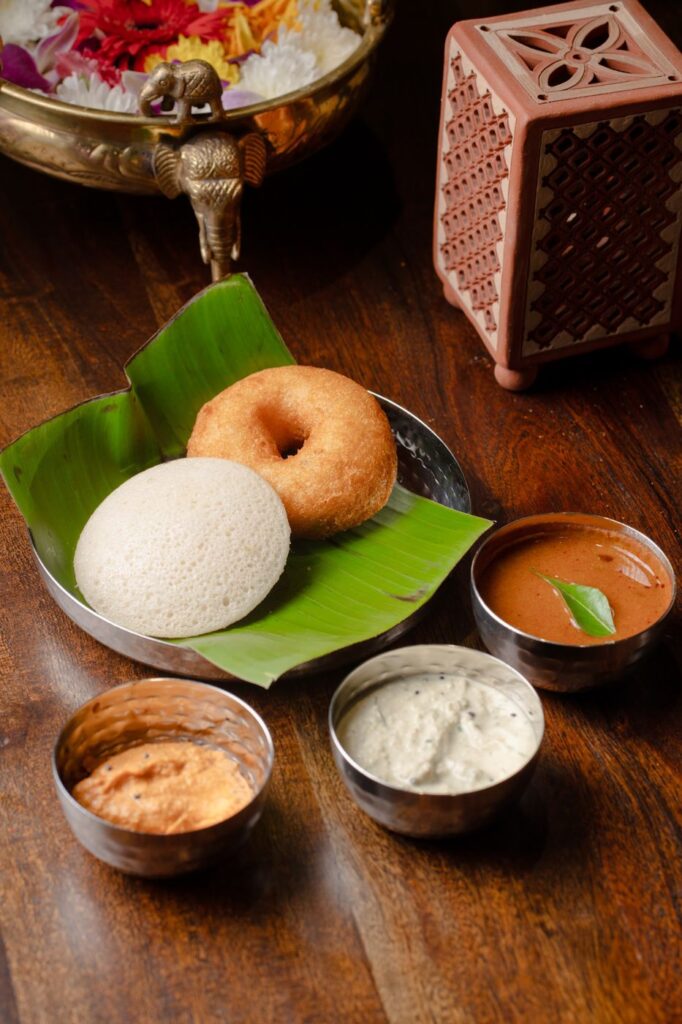
South Indian breakfast looks like a long list until you understand that almost all of it comes from two things: a fermented rice-and-lentil batter, and a ground urad dal batter. Learn what each dish does with those, and the menu stops being a guessing game.
The short answer: a South Indian breakfast in Viman Nagar means idli (steamed, soft), dosa (griddled, crisp), medu vada (fried, savoury doughnut) or khara bath (soft semolina with vegetables) — each served with sambar and chutneys, and followed by filter kaapi. If you order one thing, make it a benne dosa with kaapi.
The batter everything begins with
Rice and urad dal are soaked separately, ground, combined and left to ferment overnight. Wild yeasts and bacteria do the work, and the batter rises, loosens and turns faintly sour. Steam that batter and you get idli. Spread it on a hot tawa and you get dosa. The same mixture, two completely different results.
Fermentation is also why a South Indian breakfast sits lightly. The long rest breaks down starches before the food ever reaches you, which is part of why a plate of idli feels different from a plate of bread at the same hour.
The dishes, one by one
Idli
Steamed, mild, and meant to carry whatever it is dipped in. Good idli is springy rather than dense, and it should not need sambar to be edible — sambar should make it better, not rescue it. We also serve benne idli, glazed with butter as it comes out of the steamer, and podi idli, cut and tossed in gunpowder podi and ghee.
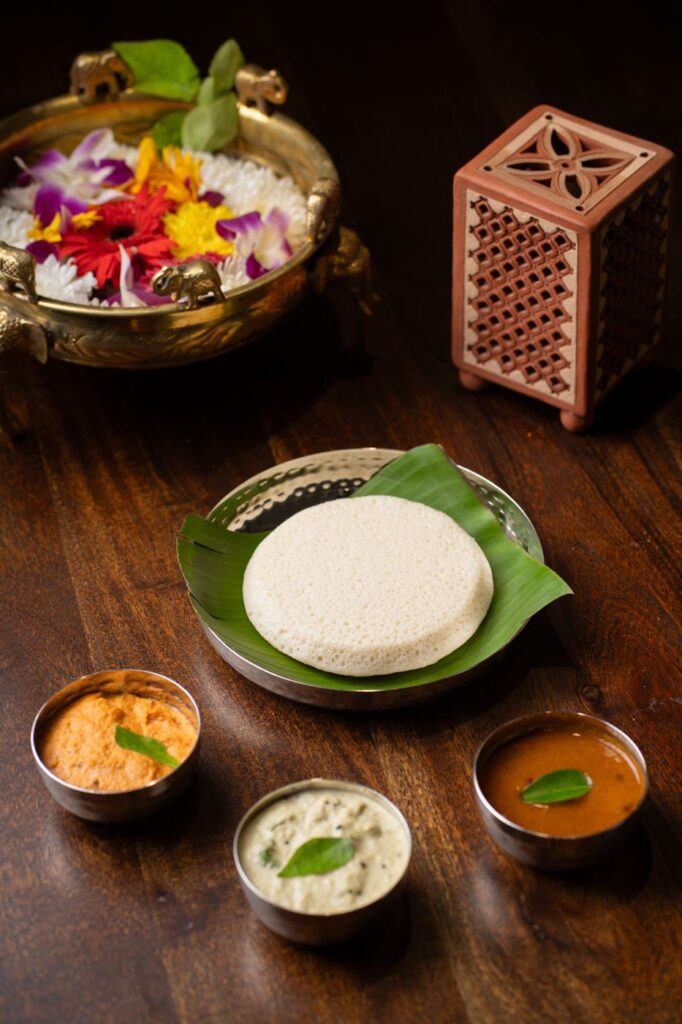
Thatte idli
A plate-shaped idli — wider, flatter, softer than the domed kind, and named after the thatte it steams in. It is the idli of the highway stops outside Bengaluru, and it soaks up sambar better than any other shape.
Dosa
Where the batter meets a hot tawa. A Bengaluru-style benne dosa is deliberately thicker and softer than the thin, crackly dosa most people picture: gold and lacy underneath, tender in the middle, finished with white butter while still on the heat and folded over potato palya.
Medu vada
Ground urad dal, seasoned with pepper and curry leaf, shaped by hand and fried — crisp outside, airy inside. Eaten plain with chutney, or dropped into hot sambar as vada sambar, which softens it through.
Khara bath
The savoury rava dish Bengaluru eats when it wants something other than batter: semolina roasted, cooked soft with vegetables, finished with a ghee tadka. Warmer and heavier than idli, and the right order on a slow morning.
Filter kaapi
Not an afterthought. Coffee and chicory sit in a steel filter while a thick decoction drips through slowly; that decoction is mixed with boiling milk and pulled between dabara and tumbler from a height, which cools it and gives it its froth. A small tumbler is strong enough to reset the morning. There is more on how we brew it in the brew section of our site.
What comes on the side, and why it matters
- Sambar — toor dal with tamarind and a masala ground for the purpose. It should taste of its own spices, not of a general curry base.
- Coconut chutney — ground fresh; bright and slightly sweet when it is made the same day, sour and flat when it is not.
- Red chutney — chilli-forward, for people who want the plate to bite back.
- Podi — a dry powder of roasted lentils, chilli and sesame, usually eaten with ghee.
How to order, depending on the morning
In a hurry and eating standing up: podi idli, because it needs no cutlery. Sitting down properly: a benne dosa and a kaapi. Sharing: thatte idli, a vada and a dosa across the table, so everyone gets a different texture out of the same set of chutneys. Not very hungry: idli sambar. Not hungry at all: just the kaapi — nobody minds.
Where to eat it in Viman Nagar
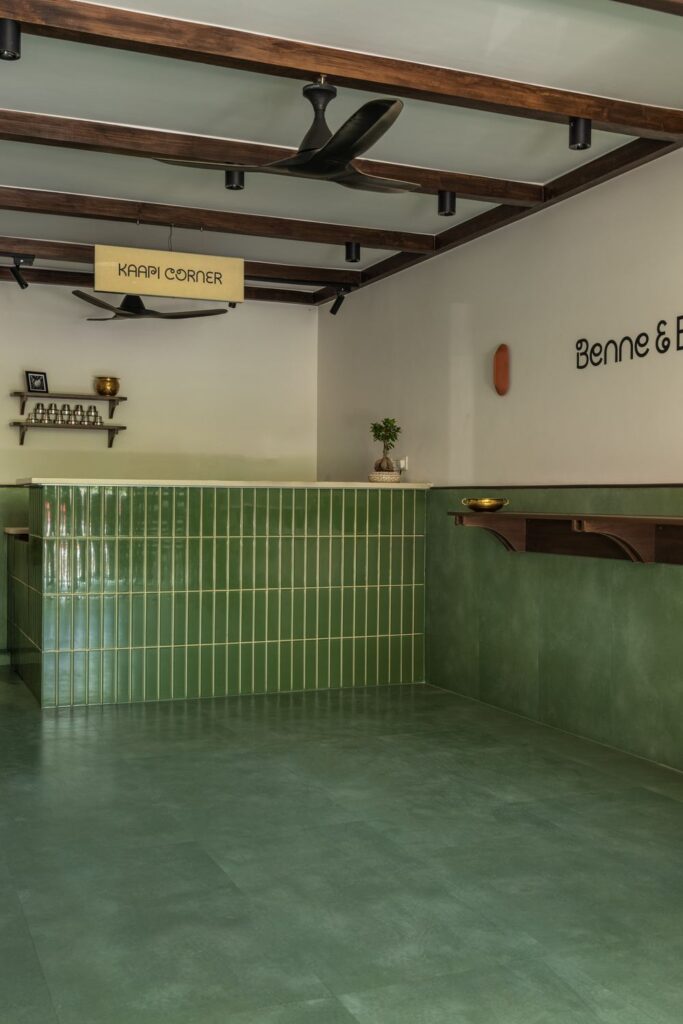
We cook every one of these dishes at Benne & Brew, Shop 21 & 22, Shubh Nirvana, on Symbiosis Law School Road in Viman Nagar, opposite 10 Biz Park. The kitchen is pure vegetarian and the menu is deliberately short. You can see the full tiffin counter, or call +91 94033 32769 to check what is running before you come.
Nearby and counting the change? We have written about eating South Indian near Symbiosis on a student budget.
See the menu · Get directions · Call +91 94033 32769 · Book a table
Frequently asked questions
What is a South Indian breakfast usually made of?
A South Indian tiffin breakfast is built on fermented rice-and-lentil batter — idli steamed from it, dosa cooked from it on a tawa — plus medu vada made from ground urad dal, and rava dishes such as khara bath. Everything comes with sambar and chutneys, and filter coffee follows.
What is the difference between idli and thatte idli?
A regular idli is small, domed and steamed in a round mould. A thatte idli is plate-shaped — wider, flatter and softer, named after the thatte or plate it is steamed in. It soaks up sambar more readily, which is why it is a favourite along the highways outside Bengaluru.
What is podi idli?
Podi idli is idli cut into pieces and tossed in podi — a dry powder of roasted lentils, dried chilli and sesame, often called gunpowder — with ghee. It is drier than idli sambar and nutty rather than soupy, and it is the easiest South Indian breakfast to eat with one hand.
Is South Indian breakfast vegetarian?
Classic South Indian tiffin is vegetarian by default: idli, dosa, vada, upma and khara bath contain no meat. Benne & Brew in Viman Nagar is a pure vegetarian kitchen, so there is no cross-contact with meat at any stage.